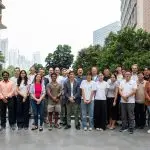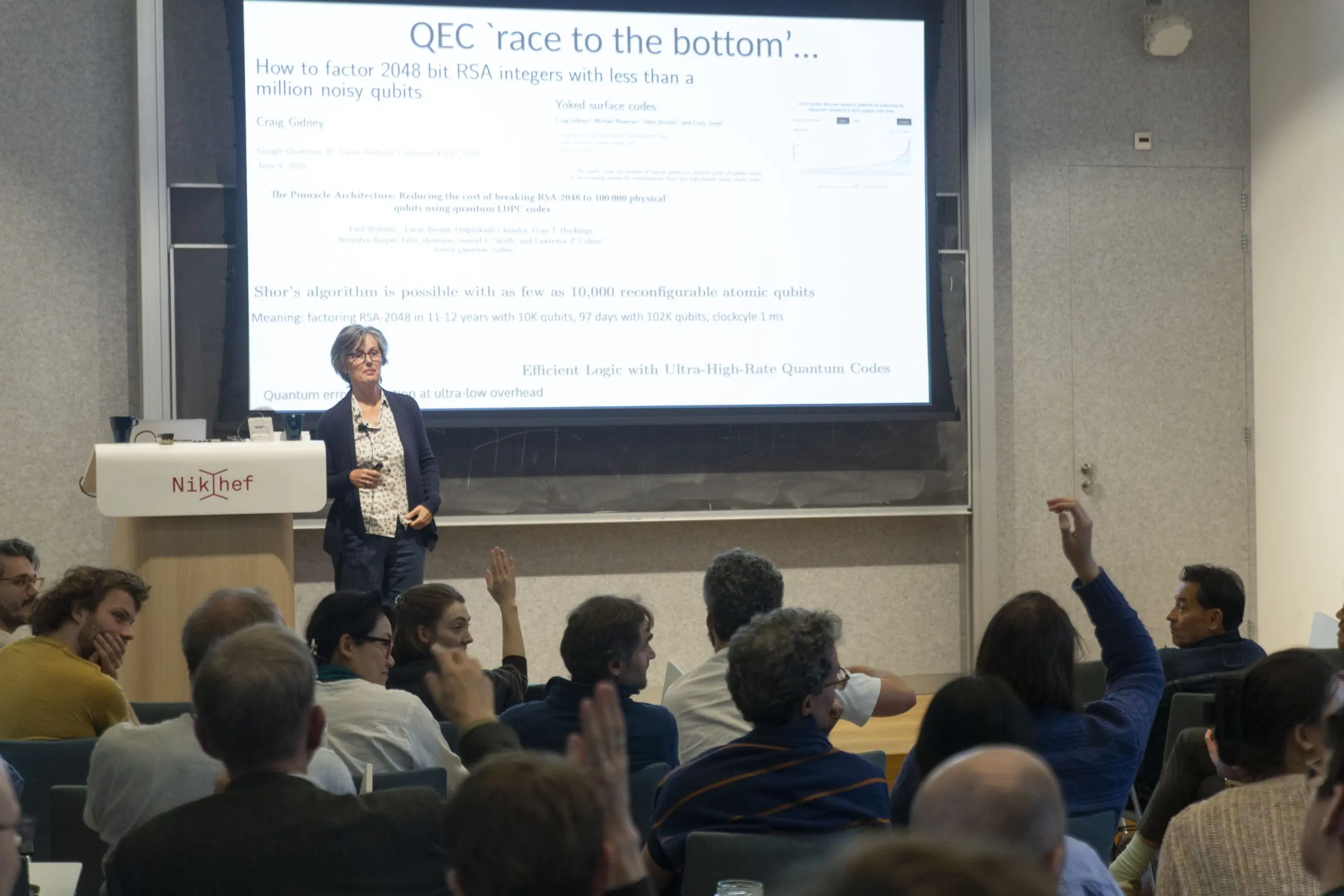
Barbara Terhal returns to Amsterdam as QuSoft’s 2026 Turing Chair, a position that marks a significant evolution for both her career and the field of quantum computing. In 1995, Terhal attended a formative quantum computing workshop in Turin, Italy, alongside a small mix of physicists, mathematicians and computer scientists, reflecting the field’s nascent state. Now a leading researcher in quantum error correction, the vital technique needed for functional quantum computers, Terhal’s month in Amsterdam culminates with the Workshop on Quantum Error Correction at Amsterdam Science Park (October 28-30), part of CWI’s research semester program.
Quantum Error Correction: Bridging Fragile Information and Physical Qubits
Quantum codes indirectly detect errors without reading the information itself, a necessity given the fragility of quantum information compared to its classical counterpart. Barbara Terhal emphasizes this fundamental need, stating, “Errors and faults occur in most processes, whether it is a CD getting scratched or DNA being altered while it gets copied.
To preserve information, mechanisms for error correction thus need to be in place. For quantum information, due to its fragility as compared to classical information, quantum error correction is a necessity at the most basic physical level.” This principle guides current research aimed at translating theoretical codes into functional hardware.
The intersection of quantum software and hardware is a key focus for Terhal in her role as QuSoft’s 2026 Turing Chair. She describes quantum error correction as sitting right in between quantum software and quantum hardware in the quantum computer stack. The last, say, 5 years have seen a lot of progress in experimental quantum error correction, with much more progress to come. These codes offer the possibility of protecting quantum information using fewer physical qubits than current methods, though computing on information stored with them remains an active area of investigation.
Despite the growing popularity of the field, Terhal offers candid advice to students, acknowledging that “Quantum error correction has become a very popular field of research, at times it feels a bit overcrowded.” She highlights the diverse nature of the work, noting, “However, it is fun to connect with quantum hardware, the research can be quite hands-on/numerical, but there are also beautiful & fascinating mathematical aspects of quantum error correction research.
So there is a bit of everything.” This blend of practical and theoretical work extends to the design of logical processing units, memory and storage, all reliant on quantum error correction, and how these elements optimize algorithm performance. Terhal believes maintaining connections between the practical and the mathematical is important as the field expands, and she stresses the importance of collaborative efforts, adding, “It can be challenging to bring people together from different communities, which is why it is important to do.
The last, say, 5 years have seen a lot of progress in experimental quantum error correction, with much more progress to come.
Barbara Terhal
Terhal’s 2026 Turing Chair Connects QuSoft with LDPC Code Advancement
Returning to Amsterdam after thirty years since starting her PhD, Terhal’s focus now centers on bridging the gap between theoretical error correction and practical implementation, a connection she believes is important for realizing functional quantum computers. She explains that every quantum algorithm requires implementation within a code architecture tailored to specific hardware capabilities, emphasizing, “Every algorithm has to be translated to its implementation in a code architecture whose design uses hardware specifications and capabilities.
Therefore I believe there is a lot of important work to do at the boundary between quantum algorithms and quantum error correction.” This interplay extends to software development, as the measurements used to detect errors rely heavily on robust software processing. Terhal specifically hopes to learn more about “logical gate constructions for LDPC codes,” a family of codes potentially requiring fewer physical qubits than current methods.
Since 2025 Terhal has combined her professorship and QuTech with a research fellowship at Riverlane, a company that builds error-correction software. Terhal believes companies can accelerate progress through focused team efforts, and that the field benefits from a blend of academic research and industry application.
Errors and faults occur in most processes, whether it is a CD getting scratched or DNA being altered while it gets copied. To preserve information, mechanisms for error correction thus need to be in place. For quantum information, due to its fragility as compared to classical information, quantum error correction is a necessity at the most basic physical level.
See today’s quantum computing news on Quantum Zeitgeist for the latest breakthroughs in qubits, hardware, algorithms, and industry deals.